



The Problem
They were wasting hours of staff time every day on a process that wasn’t that complex
A digital publisher in specialty medicine had a bottleneck: each day, staff spent spent eight hours reviewing new research, curating what was relevant to their community, and turning it into content for their platform. It was important work, but it wasn’t all skilled work. Much of the time was spent searching, copying, formatting, and repeating. The only part that really required a human was judging what content was most relevant for their website.
They believed at least part of their process could be automated. They contracted us to help them design an improved workflow and develop it. The goal was to remove the daily time-sink without losing the editorial judgment that made their content worth reading.
What We Did
We built it in stages that were integrated into their workflow
Often, developers gather requirements from a client, then disappear for months before returning with a final product to review. The problem with this approach is that it doesn’t integrate client feedback. The utility of what they develop depends entirely on how well they understood the requirements up front. However, every project involves questions and learning that only occurs once development is underway. And this isn’t only for developers: clients like you are also learn more about what you need once you have something you can actually see and interact with.
With little feedback on what’s being built, it’s common for developers to build the wrong thing. The end of the project is spent in negotiation and trying to shoehorn the application to fit the actual needs of the client. This approach balloons risk. The longer or larger a project is, the more risk is created.
Our approach is instead to build in stages and integrate the work product whenever possible. The benefit of this approach is that feedback is continuously integrated and the final solution is a tight fit for client needs. This is how we approached this project, with each stage completed ending in a working component the client put into production immediately. Every stage created value and added to everyone’s understanding of what else was needed.
The completed tool connected their website directly to the National Library of Medicine’s research database and ran daily queries against it, generating content for the platform automatically. It also extracted author data from research and automated outreach to those authors to expand on their findings on the digital publishers platform. This drastically improved their ability to publish new content.
Expanding On Success
Increasing the speed of conference coverage
Then, a few years later, they came back with a different bottleneck.
They covered the major conferences in their specialty by sending medical writers to each session. The writers worked in Microsoft Word, because that was the tool they knew. Every article then had to be manually reprocessed by editors into something publishable. The whole value of conference coverage is timeliness for the people who were not in the room, and their coverage was landing days after the event closed.
The obvious fix was to train the writers on the publishing platform. However, this would create consistency issues, a support burden, and slow down the time it took to get conference coverage live. It would just create a new job for the website’s editors.
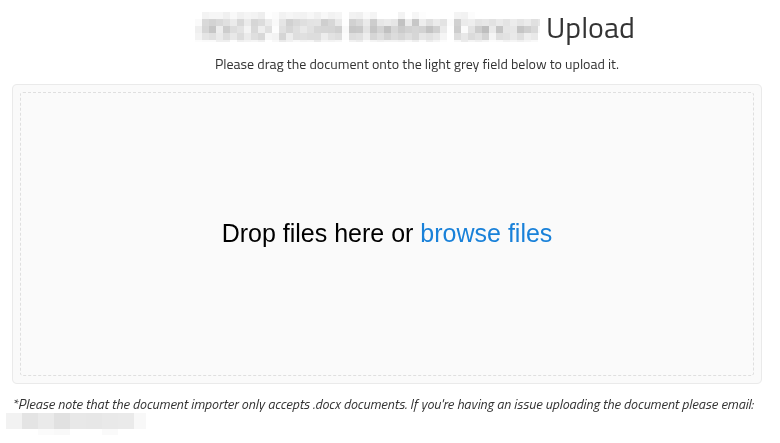
Instead, we built a plugin that does two things:
- An administrator creates a link for a specific conference and sends it to the writers. A writer opening that link sees a blank page with an upload box and nothing else.
- The writer can create the conference coverage in Word, then drag the finished file onto the box. The plugin automatically converts it into a categorized draft article on the site. The editors only have to review it and hit “publish” for the content to appear in the conference coverage on the website.
Result
Faster content production drove search traffic
The initial automation that we completed dropped their daily eight-hour process down to forty minutes. The consequence of this was that reclaimed time worth $110,000 a year in salary and the project paid for itself within a few months.
The unexpected secondary effect was scale. Freed from the manual bottleneck, the publisher expanded their scientific research coverage and their website traffic grew tenfold as their website ranked for more and more content.
The conference plugin we later developed also improved their traffic and market position. Conference coverage that used to appear days later is now posted almost immediately after a session is completed. For the large share of clinicians who do not attend any given conference, our client has become the first place the research presented at the conference appears. This has driven not only traffic, but the position of the website as a market leader.
Metrics:
- 83% Reduction In daily work
- $330,000 saved in first the first three years
- 10x website traffic growth
83%
Reduction In daily work
$330K
saved in first the first three years
10x
website traffic growth
Let’s Talk About Your Project
Have a complex technical challenge that needs expert developers? These are the sort of problems that are our bread and butter. Get in touch.
Let’s Talk About Your Project
Have a complex technical challenge that needs expert developers?
These are the sort of problems that are our bread and butter. Get in touch.
Discover More Successful Stories

Case study
Automated Acceleration
Annual salary savings: $110,000 with $330,00 savings over the first…

Case study
Membes API
Membes partnered with Steward to develop a WordPress plugin…

Case study
Prostate Cancer
We helped Prostate Cancer Foundation Escape Legacy Email Software…
Case study
Westa Case Study
Westa partnered with Steward to completely reimagine their web presence…